
Wheelchair and mobility planning that actually works
Renting on the day is the most expensive and least reliable option. A realistic plan for pilgrims who cannot walk the full distance.
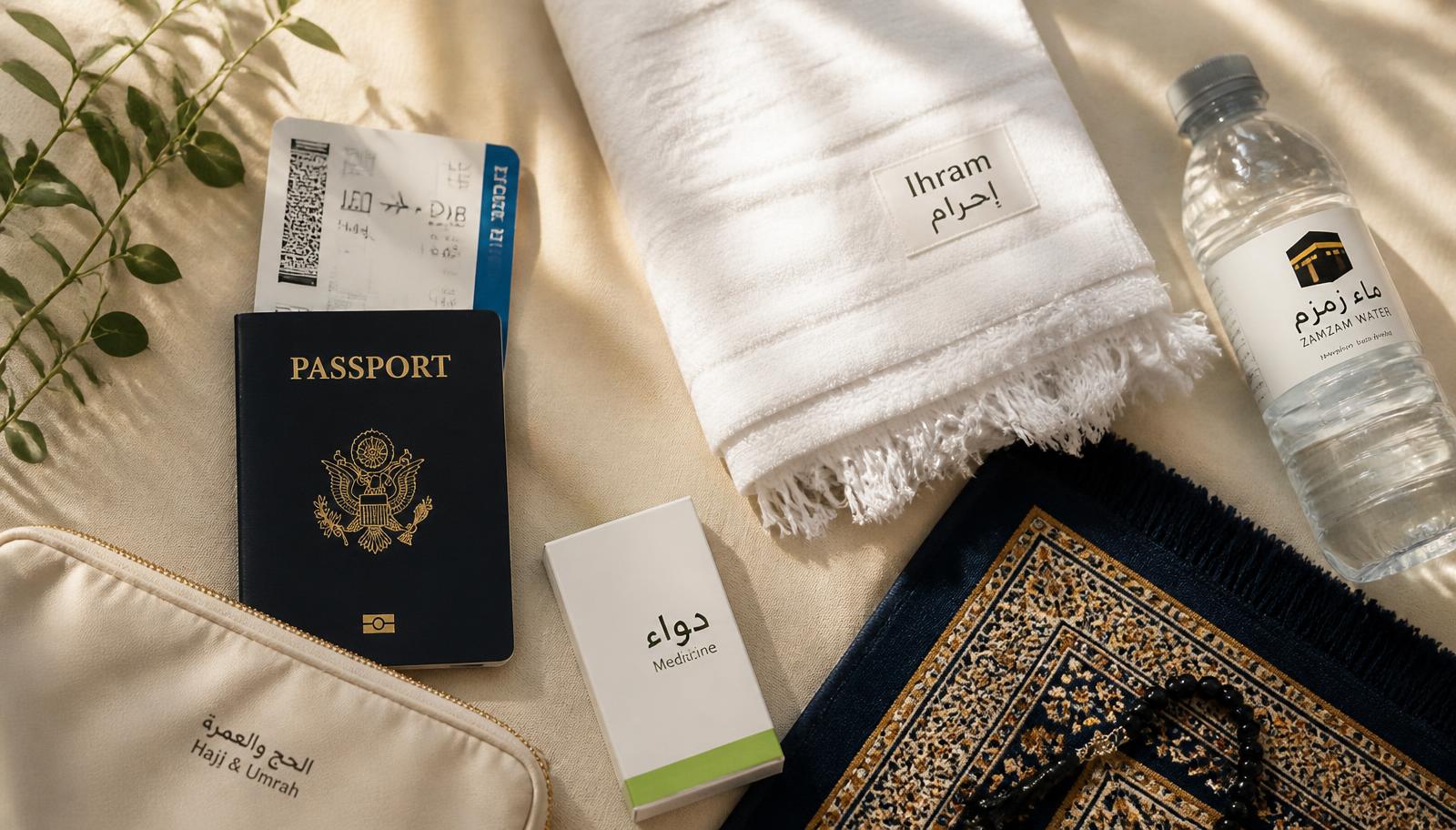
The decision to use a wheelchair is usually made too late, in the courtyard, by a family already exhausted, at whatever price is being asked at that moment.
Decide before departure
Distance is the honest measure. A single Ṭawāf is roughly 3.2 kilometres on the ground floor and considerably more on the upper levels; Saʿī adds about 3.5 kilometres. A pilgrim who cannot comfortably walk five kilometres on a cool morning at home will not walk nine in Makkah in summer.
- Book pushed wheelchair or electric cart services in advance through the operator, not on the day.
- Confirm which level the service operates on — upper-floor Ṭawāf is longer but far less dense.
- Budget for the return trip too; families routinely fund the outbound and improvise the return.
- Bring a lightweight folding chair for hotel-to-Ḥaram transitions if the pilgrim can walk short distances.
- Assign one family member as the pusher for each rite, by name, in advance.
The dignity part
Many elders resist the chair because it feels like an admission. Framing helps: the chair is what makes the full rite possible, not what diminishes it. Several scholars have noted that the pilgrim who preserves their strength to complete the manāsik has chosen well.
“The goal is a completed pilgrimage, not a heroic one.”
Last updated 4 March 2026