
Why we built a mesh network instead of trusting the towers
Around the Ḥaram, cellular capacity fails precisely when density peaks. How a thirty-metre device-to-device relay keeps an SOS moving with zero bars.
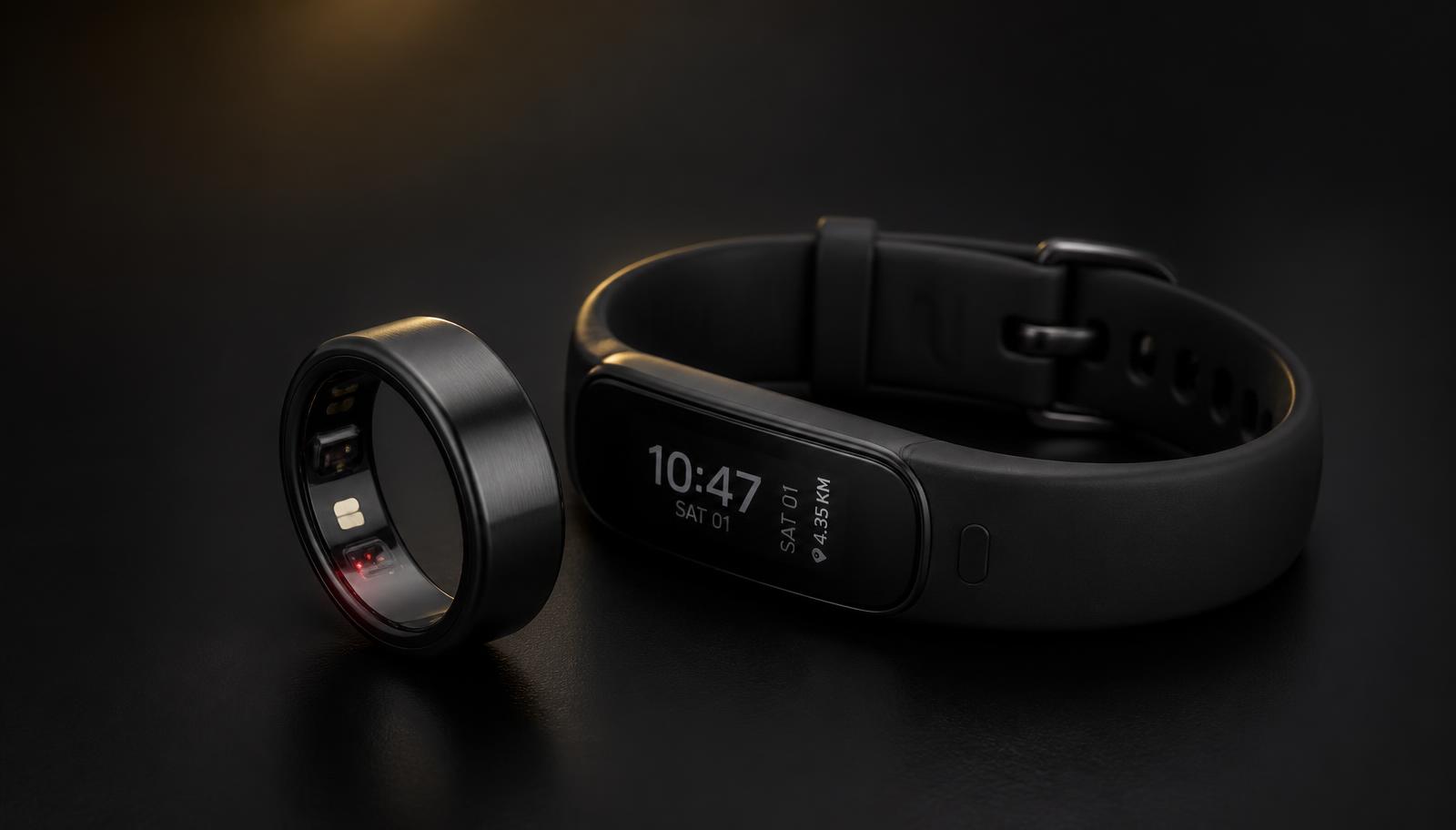
Cellular networks degrade gracefully under load right up until they do not. A sector serving a plaza is dimensioned for a busy shopping evening, not for two hundred thousand people standing in it simultaneously, all attempting voice calls to three continents at the same instant that the rite ends.
The failure mode matters. It is rarely a total outage. It is a random access channel so contested that a handset spends minutes failing to attach, while the status bar still shows bars. To the pilgrim it looks like the phone is working. To the emergency contact it looks like silence.
The design constraint we started from
An SOS must leave the pilgrim's body and reach a duty operator without depending on the pilgrim's own uplink. That rules out any architecture where the wearable is a peripheral of a phone that is itself a peripheral of a saturated tower.
So the wearables speak to each other. Each device carries a Bluetooth Low Energy radio configured for short advertising bursts at roughly thirty metres in dense crowd conditions — far less in open air than the datasheet suggests, because bodies are mostly water and water absorbs 2.4 GHz enthusiastically.
How a packet actually travels
- An SOS is compressed to a 44-byte payload: device ID, timestamp, last known fix, battery, and a strain flag.
- The packet is broadcast, not addressed. Any Yahaji device in range accepts it, stamps its own ID, and re-broadcasts once.
- Each hop decrements a counter; the packet dies after eight hops or ninety seconds, whichever comes first.
- Duplicates are suppressed by a rolling hash so a crowd does not become a broadcast storm.
- The first device with working connectivity — often a group leader standing at the plaza edge — becomes the gateway and posts the packet upstream.
In a crowd, density is the asset. The same conditions that break the tower are the conditions that guarantee a neighbour within thirty metres. Our worst-case latency in field tests was eleven seconds across six hops; the median was under three.
“The network you can rely on during Ḥajj is the one made of other pilgrims.”
What it does not do
Mesh is not a replacement for infrastructure. It carries tiny, urgent payloads — alerts, positions, acknowledgements. It does not carry voice, it does not carry the app, and it does not work if the surrounding devices are switched off. It is a floor beneath the network, not a substitute for it.
Last updated 12 July 2026